

Introduction
Ebola has long been recognized as a formidable threat, earning its reputation as a nightmare that must be approached with caution and diligence. The disease first emerged in August 1976 in Yambuku, a village near the Ebola River, which ultimately lent its name to the virus. After its emergence, Ebola outbreaks occurred intermittently within the region, primarily affecting the Democratic Republic of Congo (DRC), Sudan, and Uganda. Despite these occurrences, the outbreaks were typically contained, allowing life in these areas to return to normal.
Ebola escalated to a global health threat during the 2014–2016 outbreak in the West African subregion, specifically in Guinea, Sierra Leone, and Liberia, with the World Health Organization declaring it a Public Health Emergency of International Concern in August 2014. This epidemic resulted in a staggering death toll of 11,325 and over 17,000 survivors enduring the aftermath of the disease, by June 2016. The crisis marked a turning point in the world’s perception of Ebola, highlighting its potential for widespread devastation.
Since the West African outbreak, there have been multiple subsequent outbreaks in other regions. Today, the global health community is once again confronting this challenge. In May 2026, Bundibugyo virus disease was confirmed in the Democratic Republic of Congo and Uganda, prompting the World Health Organization to declare a Public Health Emergency of International Concern on 17 May 2026. This raises an important question: Is there something unique in the response or circumstances in West Africa that warrants further examination in regions experiencing repeated outbreaks?
In this article, I reflect on my experiences and insights as Liberia’s Deputy Incident Manager for Medical/Planning during the 2014-16 Ebola outbreak and subsequent appointment as the Chief Medical Officer/Deputy Minister for Health Services.
Community Engagement in Ebola Outbreak Control
The outbreak of Ebola in West Africa posed an unprecedented challenge, deeply affecting the region’s social and cultural norms. The epidemic forced communities to reconsider fundamental aspects of their daily lives, including the way they honor their deceased, greet one another, and, most importantly, care for the sick. These disruptions extended to traditional caregiving roles, especially those taken on by women, who are often central to providing care within families.
During the crisis, critical missteps occurred as responses relied solely on scientific protocols, overlooking the perspectives and needs of those most affected. This approach failed to recognize the value of learning from the impacted communities, whose insights could have contributed to more effective and lasting solutions.
It is important to remember that successful disaster management begins within the community. The involvement and engagement of local communities are essential to bringing an outbreak under control and ultimately ending the nightmare. Only through this collaborative approach can the response be both effective and sustainable.
Building Community Trust During an Outbreak: The Case of Liberia
Adopting unconventional strategies and swiftly adapting methods for engaging with affected communities proved crucial in managing the Ebola crisis. This flexibility turned a dire situation into an instructive case study and, ultimately, a resolution.
Lessons from West Point: Shifting from Military to Public Health Response
During the initial phase of Liberia’s Ebola outbreak, particularly within the densely populated slum of West Point, authorities implemented a military response instead of a public health strategy. The term “quarantine” became associated with negative outcomes after a young man died from a bullet wound during the military’s enforcement of quarantine measures. This event highlighted the need for a different approach that would gain community trust and cooperation.
Introducing “Precautionary Observation” as a Negotiated Quarantine
To address the challenges of isolation and resistance, a new concept was introduced: “Precautionary Observation.” Defined as a negotiated quarantine, this approach involved isolating individuals, families, or entire communities while ensuring their basic needs—such as food and water—were met. The arrangement included a mutual understanding that health workers could enter the area to monitor residents, collect samples if necessary, and remove those exhibiting symptoms. By reframing isolation through this new terminology and collaborative strategy, the goal of effective containment was achieved without resorting to force or creating negative associations.
Innovative Approaches to Isolation
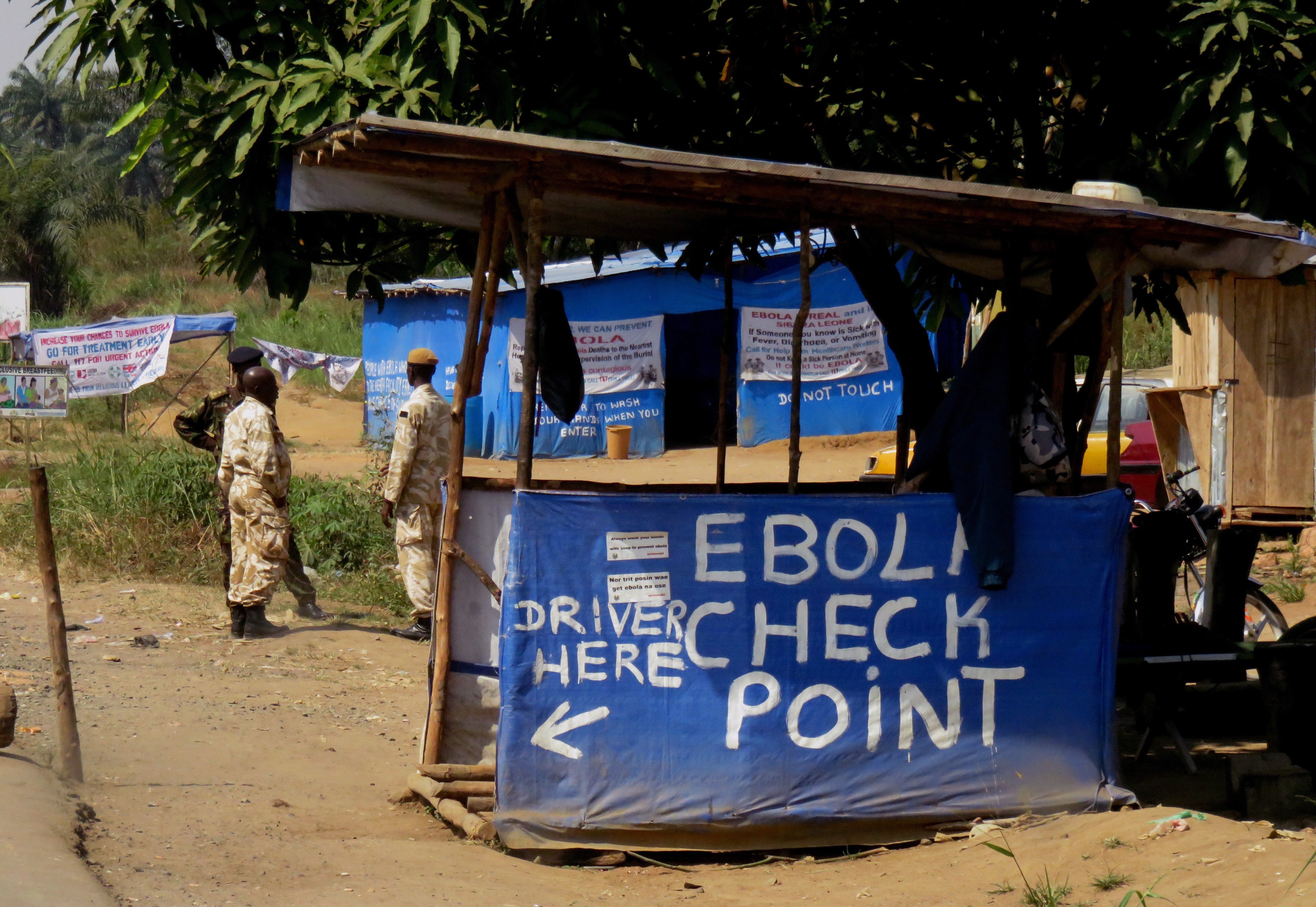
Source: CDC Public Health Image Library (PHIL) |
Development and Rationale Behind Community Care Centers (CCC)
The introduction of Community Care Centers (CCC) was a direct response to the overwhelming demand placed on treatment units during the Ebola outbreak. As these units reached capacity, patients in need of isolation and care had no designated spaces while awaiting confirmation and ongoing treatment. To address this gap, existing community structures—such as school buildings or abandoned facilities—were repurposed to serve as isolation centers for both suspected with or without diarrhea/vomitus (dry/wet) cases. This approach enabled quick isolation and management of patients, significantly contributing to efforts aimed at reducing infection rates because healthcare workers had direct access to collect samples based on the symptoms being manifested by the patients for laboratory confirmation. The CCC strategy proved effective in breaking the chain of transmission, supporting the overarching goal of achieving zero infections.
Rapid Isolation and Treatment of Ebola (RITE) Strategy
Complementing the CCC approach, the Rapid Isolation and Treatment of Ebola (RITE) strategy took containment efforts further. This method involved organizing specialized teams that remained on standby around the clock. Whenever reports or rumors of death or illness surfaced, these teams would swiftly mobilize, isolate affected individuals, collect diagnostic samples, and initiate symptomatic treatment. By deploying teams to even the most remote rural areas, the RITE strategy enabled prompt “Precautionary Observation,” facilitating effective isolation from the outset. If a sample tested positive, the individual would already be isolated, and contact tracing would be underway, thereby reducing the risk of further disease spread.
Together, CCC and RITE strategies played pivotal roles in controlling the outbreak, ensuring rapid and effective responses that minimized transmission and protected communities.
Understanding Infection Transmission
Recognizing and Addressing Infection Transmission
Understanding the mechanisms by which infections spread is essential for the effective management and control of disease outbreaks. A lack of insight into transmission pathways can result in ineffective or misdirected intervention efforts, ultimately hindering containment and mitigation strategies.
Community-Led Isolation: The Case of Tappita District
A notable example of effective community engagement occurred in Tappita District, Nimba County, Liberia, in March 2014. Elders and traditional chiefs in the district implemented a tacit entry point approach, allowing them to monitor and track individuals entering their villages. They also developed and enforced their own isolation mechanisms tailored to the local context. As a result of these proactive and community-driven measures, Tappita District did not report a single case of Ebola during the crisis. This experience highlights the power of local leadership and culturally attuned strategies in preventing disease transmission and safeguarding communities.
Lessons from Conventional Warfare: Missteps in Disease Response
Drawing an analogy from conventional warfare, it is often less relevant to identify the type of bullets being fired than to first address the source of the threat. The priority is to neutralize the opponent’s firepower before considering specifics about the ammunition. Similarly, in the fight against Ebola, focusing too much on the origin—such as whether people contracted the virus from bats or monkeys—can divert attention from the immediate danger. While it may be true that the first “zero case” originated from animal exposure, ongoing transmission is primarily person-to-person.
Prioritizing Community Education on Disease Transmission
The most effective approach is to rapidly educate communities about how Ebola spreads between individuals. This knowledge empowers people to take appropriate precautions and reduces the risk of further infections. Rather than concentrating solely on the origin of the outbreak, timely and clear messaging about transmissibility is essential. In combating infectious diseases, speed and clarity in communication can make a significant difference, underscoring the importance of concise and targeted educational efforts.
Importance of Flexibility in Public Health Response
As a public health expert, I have come to understand that adaptability is essential when confronting infectious diseases. My pathology professor emphasized decades ago that pathogens do not follow textbook rules, and students must use their knowledge to devise practical solutions for preventing complications. This insight proved invaluable during a challenging Ebola case in Liberia.
Case Study: Unexpected Ebola Transmission After a Period of No Cases
Liberia had gone more than 32 days in February 2015 without any new suspected cases or contacts under precautionary observation, raising hopes that the country would soon be declared Ebola-free. However, the discovery of a female patient diagnosed with Ebola—after a postmortem specimen tested positive—shattered these expectations. During the investigation, it was determined that the patient had not traveled outside the country nor received visitors from neighboring hotspots, Sierra Leone and Guinea. After considering all possible scenarios, we asked the deceased’s daughter about her father’s whereabouts and learned he had been absent for years. When asked if her mother had a partner, she confirmed and provided his name and residence. The county Incident Manager checked the survival database, and a match was found.
Reevaluating Guidelines Through Real-World Evidence
The survivor had followed guidance to abstain from unprotected sex for three months, as recommended by the literature at the time. He waited 150 days, but further investigation revealed he was still shedding active Ebola virus in his semen, confirming he had transmitted the infection. This finding prompted a natural study in Liberia involving over a thousand survivors, which demonstrated that the virus remained active in semen at varying levels even three years after recovery. The Liberian team reported this breakthrough to the World Health Organization (WHO) in Geneva, WHO Regional Office in Brazzaville, and the Centers for Disease Control and Prevention (CDC) in Atlanta, leading to revised guidelines. This experience highlights the value of thinking innovatively and adapting strategies based on evolving evidence.
Lessons for Future Ebola Crisis Management

Source: CDC Public Health Image Library (PHIL) |
The practical experiences gained through the application of innovative strategies were crucial in enabling Liberia to effectively manage the unprecedented Ebola crisis a few years ago. These approaches demonstrated the value of adapting traditional methods to meet new challenges and highlighted the necessity of flexibility in public health responses.
Rethinking Strategies for the Democratic Republic of Congo (DRC) and Neighboring Regions
The ongoing Ebola outbreaks in the Democratic Republic of Congo (DRC) and neighboring countries present unique and complex challenges that render conventional, standardized approaches insufficient. The persistent internal conflict within the DRC has severely weakened the region’s health infrastructure, and the ongoing Ebola crisis only adds to these difficulties. In such unstable conditions, traditional public health strategies often fail to address the realities faced on the ground.
Uganda's response over the past few weeks has been swift and instructive. The Ministry of Health activated rapid response teams, intensified surveillance, deployed contact tracing operations, and established screening at 13 points of entry across the country. As of late July 2026, Uganda has confirmed 20 cases, the majority traceable to travelers arriving from DRC, with no evidence of sustained community transmission. On 28th July 2026, The Ministry of Health, Uganda officially declared the end of the 2026 Ebola Disease outbreak. The declaration follows the successful completion of the mandatory 42-day monitoring period, which began after the discharge of the last Ugandan national, a locally transmitted patient on 16th June 2026. This is not Uganda's first time demonstrating disciplined outbreak control: three previous Ebola outbreaks in the country (2019, 2022, and 2025) were each contained within 90 days with no cross-border spread, a record that reflects deep institutional capacity and community trust built over years.
Therefore, to successfully manage Ebola outbreaks in these challenging environments, it is necessary to adopt an asymmetrical approach. This means designing interventions that are not only flexible and adaptable but also attuned to the distinctive challenges created by ongoing instability and compromised health systems. By considering the social and political context unique to each region, response efforts can be more effective and better suited to the realities faced by affected communities.
In Conclusion
The outbreak response in Uganda offers a timely illustration of these principles in action. The Uganda Ministry of Health's rapid activation of its national emergency operations, deployment of contact tracing teams, border screening infrastructure, and clear public communication have all contributed to preventing sustained community transmission. Their approach reflects the very lessons that outbreaks of the past demanded the global health community learn. As the situation in DRC and the neighboring countries continues to evolve, the collective experience of response systems across Africa offers both caution and cause for confidence.
These experiences highlight an important lesson: effective management of Ebola outbreaks in the DRC and neighboring regions requires the involvement of all relevant individuals and organizations. Without the active participation of key stakeholders, there is an increased risk that the outbreak could escalate and potentially become a major global crisis. Asymmetrical strategies must therefore be implemented, engaging all pertinent parties and adapting to changing circumstances as they arise. The importance of this tailored, collaborative approach is fundamental to achieving a sustainable solution for mitigating the recurring Ebola outbreaks.
About the Author: Francis N. Kateh is a medical doctor, health administrator and an expert in homeland security with emphasis in Biological Weapons of Mass Destruction. He served as Public Health Director, Anson County, North Carolina; CEO/Medical Director, Jackson F. Doe Memorial Regional Referral Hospital, Tappita, Liberia; Chief Medical Officer/Deputy Minister, Health Services, Republic of Liberia; Deputy Incident Manager for Medical/Planning for both Ebola and COVID, Liberia and presently a Director at Areem Plus Global Consultancies, Dubai.
Topics: Ebola | Outbreak Management | Global Health